The Energy Storage Logjam is Breaking: Sodium-sulfur Batteries Can Help
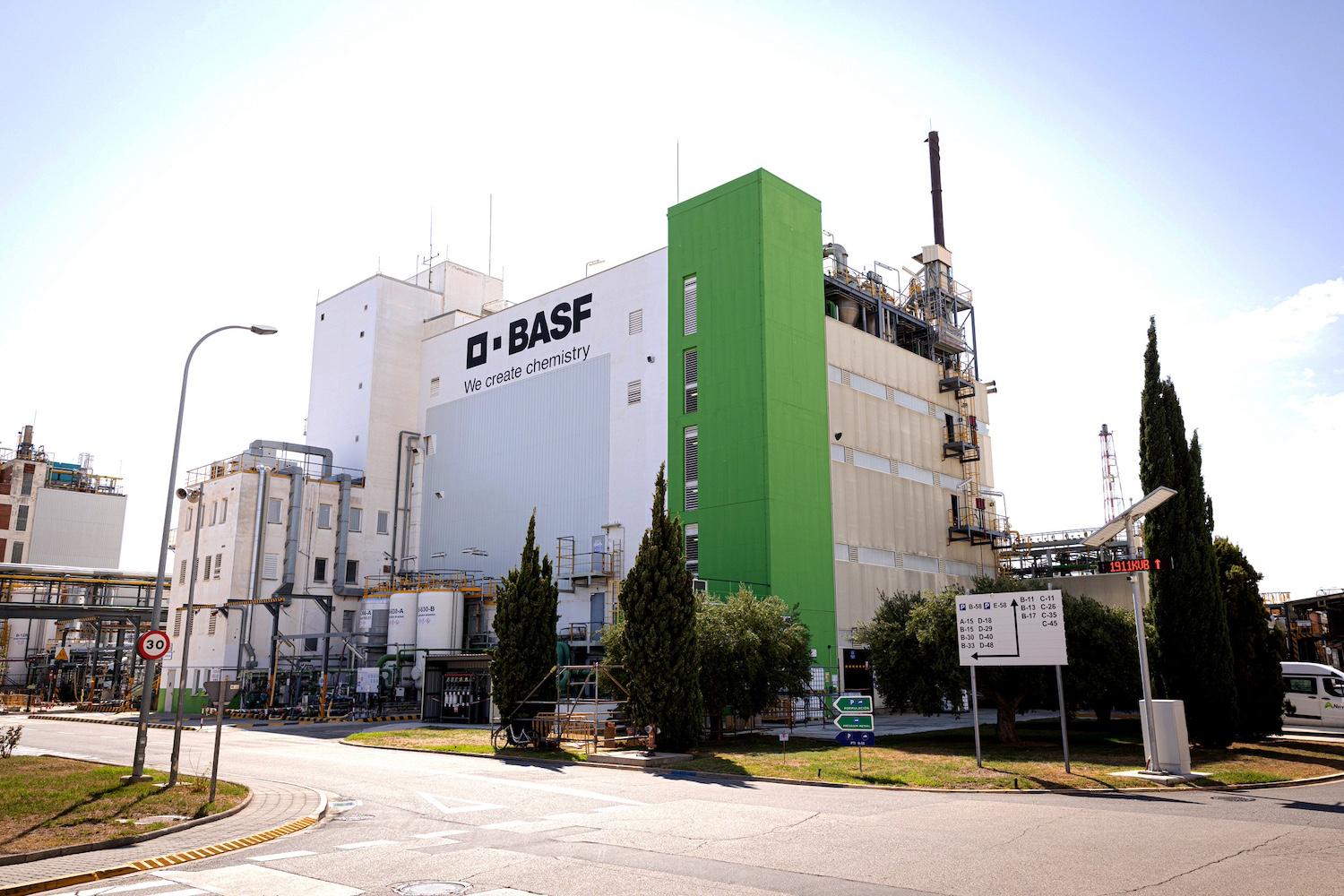
BASF is developing a longer-duration version of its sodium-sulfur battery, which offers duration, supply chain, and safety advantages over lithium-ion. (Image courtesy of BASF.)
Between Hurricane Beryl in Texas and a series of heat waves across the U.S., the impact of a warming climate has come into clear view this year. Equally clear is the need to remove some bottlenecks standing in the way of rapid decarbonization. That includes the availability of energy storage.
To decarbonize the grid, entirely new systems must be developed to hold more wind and solar energy for longer periods of time. In the meantime, facility managers can take advantage of a near-term solution in the form of sodium-sulfur batteries, a technology that offers advantages over the familiar lithium-ion formula.
Energy storage and the shift to peak winter demand
Lithium-ion batteries have dominated the energy storage market for many years. Electric vehicles, home energy storage systems and grid-scale battery arrays are some of the familiar use cases. In the stationary storage field, though, lithium-ion arrays are typically limited by a duration of four hours, or less.
The four-hour standard is no accident. It’s incentivized in some wholesale electricity markets in the United States to support a grid-balancing strategy that takes solar energy into consideration. More solar energy is available during the summer, and summertime peak demand periods tend to be relatively short in duration, making four-hour storage an economical choice.
Peak demand periods in winter require a different strategy. Winter demand peaks can last into the evening when solar power is not available. Traditionally, natural gas and heating oil fill the gap, but these resources are falling by the wayside as the building electrification movement gains momentum. The U.S. Department of Energy is among those advising that a shift in energy storage strategy is needed over the coming years to focus more attention on wintertime demand.
Parts of the Southeast and Texas already shifted to a winter demand pattern, according to a National Renewable Energy Laboratory report. The lab anticipates wholesale electricity markets will respond by incentivizing periods of energy storage duration beyond four hours.
Longer-duration energy storage gives grid managers more opportunities to smooth out the bumps in wind and solar availability. Taking advantage of low off-peak rates for longer periods is another benefit.
The sodium-sulfur solution
One energy storage solution already on the market is a proven sodium-sulfur formula, often called NAS based on the scientific abbreviations for the two chemicals. The chemical producer BASF is among the battery stakeholders with lengthy experience developing and marketing NAS batteries. The firm is introducing an updated, six-hour duration version of its NAS technology called NAS Model L24, in partnership with the Japanese manufacturer NGK Insulators.
In contrast to the volatile liquid electrolyte used as a part of the charging and discharging process in conventional lithium-ion batteries, NAS batteries use a stable, precisely designed ceramic material.
Although the word “ceramic” suggests a fragile object, industrial ceramics are different. A durable, high-performance ceramic material is commonly used in electrical applications, including the new generation of solid-state batteries emerging in the electric vehicle field.
Ceramics are also made from earth-abundant materials, an important factor to consider as manufacturers focus their attention on supply chain sustainability and security, said Caroline Brannock, BASF senior sales manager for battery technology.

Changing mindsets on energy storage
Despite the longer duration and supply chain advantages of NAS, the lithium-ion industry still has the advantage of familiarity. That can be a formidable obstacle to overcome.
“Everyone is so accustomed to lithium-ion technology, so it’s not necessarily about prices or technical specifications,” Brannock told TriplePundit.
Safety is one consideration that could make a difference. “We have a lot of safety concerns with lithium for mobility and stationary storage,” Brannock said, noting that lithium-ion installations typically require additional containment measures to reduce risks.“Two major concerns are thermal runaway and toxic gas release, particularly for urban areas. This is something NAS does better.”
The lithium-ion battery industry has incorporated new fire safety systems, according to a report from the Electric Power Research Institute. The report notes a sharp drop in the rate of battery energy storage system fires and other incidents described as “failures” in recent years. Still, knowledge gaps remain, and “a significant fraction of [battery energy storage systems] failure incidents had an unknown root cause,” according to the report
The long road to long-duration energy storage
BASF foresees commercial and industrial operations along with hospitals, schools, and other facilities that depend on a continuous supply of power in the event of an emergency among prospective customers for the new NAS battery. Islands and other remote communities would also benefit from access to energy storage technologies that last longer than the four-hour standard.
Beyond the needs of individual facilities and isolated communities, the U.S. Department of Energy is providing funds for innovators developing new energy storage systems with much longer durations capable of handling more wind and solar energy as the nation decarbonizes its power grid. The agency set a 10-hour minimum for new long-duration energy storage systems.
In the future, facility managers will have additional opportunities to weigh the costs and benefits of these new technologies. For the here and now, NAS offers a solution that can bridge the gap with duration, supply chain and safety advantages.
Amazon Reduces Packaging Waste with Artificial Intelligence


(Image courtesy of Amazon.)
In the quest to increase its sustainability standards, e-commerce giant Amazon has used artificial intelligence (AI) and machine learning to maximize its efficiencies for decades.
The company developed one such AI tool, the Package Decision Engine, to reduce packaging waste and optimize material use. It’s so far helped Amazon avoid over 2 million tons of unnecessary packaging and reduce packaging weight per shipment by 43 percent on average in the United States, Canada and the European Union. It's also helped Amazon avoid 80,000 metric tons of single-use plastic packaging globally since 2020.
Unfortunately, Amazon does not disclose how many tons of packaging material it uses each year. But in 2023, it delivered over 7 billion units by same-day or next-day delivery to Prime members. More than 4 billion of those deliveries took place in the U.S. — a 65 percent increase over 2022 — and more than 2 billion were in Europe.
For such huge volumes of products and an infinite number of order combinations, identifying the optimal packaging solution to keep each order safe during transit while minimizing the amount of packaging represents a significant challenge. The Package Decision Engine’s AI model is built to select the most appropriate packaging based on the product’s size, fragility and material type.
“The Package Decision Engine uses a combination of deep machine learning, natural language processing and computer vision, and is continuously learning about Amazon’s ever-evolving packaging options,” Kayla Fenton, senior manager of sustainable packaging at Amazon, told TriplePundit in an email. “It can predict when a more durable product like a blanket doesn’t need protective packaging, or when a fragile item like a set of dinner plates might need a sturdier box.”
The AI tool learned that certain keywords associated with the product are important when making packaging decisions. “For example, a padded mailer with limited cushioning might not adequately protect an item with the words 'grocery,' 'screen,' or 'stoneware' in the description,” Fenton said. “So the model would recommend a sturdier option, such as a box. The model has also learned that keywords like 'multipack,' 'bag,' 'shrink,' and 'pack' are also associated with lower damage rates in the mail, and so indicates that the product might already have protective packaging and not need additional protection.”
The Package Decision Engine was conceptualized in 2015 as part of Amazon's broader sustainability goals, which include reaching net zero carbon emissions by 2040. Now, it's expanding to other markets including India, Australia and Japan. But “the tool will need to learn new languages and incorporate products specific to the new markets in order to continue rolling it out internationally,” Fenton said.
One of the ways it learns is by collecting information in near real-time from customer feedback reported through Amazon’s Online Returns Center, product reviews and other customer feedback channels.
“After compiling customer feedback with visual information and other text-based data about the item, the model produces a score that predicts the best packaging type to use,” Fenton said. “The packaging selection is remembered by the model and used to understand future packaging needs.”
This feedback loop ensures that the packaging meets sustainability standards and customer expectations regarding product protection and waste reduction.
The company’s commitment to reducing packaging waste extends beyond its internal operations. Another AI initiative in the works that revolves around reducing waste is its pilot with Glacier, a recycling tech company based in San Francisco.
“Glacier uses AI-powered robots to automate the sorting of recyclables and collect real-time data on recycling streams for companies, which can help reduce landfill waste and increase the use of recycled materials in packaging,” Fenton said. “Amazon is currently testing Glacier’s technology to sort and recycle new types of packaging that is not yet recycled at scale today, including bio-based and biodegradable plastics.”
Women Run Less Than 25% of Nonprofits: How Organizations Can Change That


(Image: Benjamin Child/Unsplash)
A staggering 75 percent of workers in the nonprofit sector are women, according to the most recent data available from the American Association of University Women. The high percentage of women working in nonprofits should translate to higher numbers of female-led organizations in the sector. But only 42 percent of nonprofit boards are led by women, while only 22 percent of nonprofits are run by a woman executive director or CEO. The percentage of female-led nonprofit boards drops to 33 percent when it comes to organizations with incomes of $25 million or more, according to Nonprofit Quarterly.
The irony is that nonprofits work to make the world more equitable, but even within the sector, hiring practices skew towards male leadership despite a wealth of women workers in the field. This also seems to have a knock-on effect on the gender pay gap. On average, women earn around 25 percent less than men in the nonprofit sector, according to research by the National Council of Nonprofits. So why is progress slow?
With over 20 years of experience in nonprofit executive searches and transitions, Sara Garlick Lundberg said it all comes down to not working hard enough to get rid of implicit bias, which nonprofits should be aware of and work on internally. Sexist and misogynistic biases should be purged from any hiring process within organizations seeking to increase female leadership in their ranks.
“People use the term ‘executive presence’ a lot which is a term that really gets under my skin,” said Lundberg, the managing partner of nonprofit search practice for North America at DHR Global, pointing out the kinds of biases that should be re-examined. “It makes me cringe because these are qualities and characteristics that are more traditionally identified as male qualities. There’s that confidence that our society identifies as inherently male when you’re looking at leadership positions — that is, very often, people are looking for someone who will be compelling, someone who can speak convincingly to their staff.”
Another issue is that leadership roles are usually given to people in their mid-to-late 30s, so decision-makers preemptively question whether women eligible for these positions will be having children and starting a family at this age, Lundberg said. Boards of directors should recognize these biases during the interview process, check if their assumptions of candidates are about their gender, and recalibrate accordingly.
“If the candidate is around this age, her commitments outside of the office are absolutely being questioned. If not explicitly, they are very often being questioned implicitly,” Lundberg said. “This doesn’t happen all the time, but it does happen very often. People assume that mothers can't bear the burden of a busy executive position, but that same question or assumption is almost never made of male candidates.”
For women of color, the reality is even worse. Research shows they are particularly burdened in the sector, rarely being offered positions of leadership and taking on the majority of the work. Ultimately, implicit bias results in a lack of will to put women of color in these positions. It can paint a woman of color as unqualified for the job, especially when it comes to demonstrating professionalism that is usually associated with whiteness. Non-white hair styles, different cultural backgrounds, and socioeconomic differences can come across as unprofessional for people who haven’t challenged these biases within their own perceptions.
Things will change, but they simply are not progressing quickly enough, Lundberg said.
“There are some extra hurdles that come with being women,” Lundberg explains. “For example, you go off to a conference and all the guys are playing golf, which socioeconomically or racially is not something you are familiar with. I didn’t grow up in a family with the financial means to play golf, for example. So there are day-to-day barriers to inclusion and day-to-day barriers in the interview process.”
These “hidden” barriers present real obstacles for women to network and informally gauge opportunities for their own professional growth. Organizations should be investing in networking spaces that feel familiar to all kinds of people, rather than fancy retreats and conferences. It’s up to the organizations trying to improve on their gender bias to create spaces where female candidates feel comfortable being themselves to show off their skills.
Diverse hiring is only one step in increasing the number of women of color leaders in an organization. The culture within an organization has to be hospitable to the demands of people of all kinds. For allies who want to help women of color get there, Lundberg recommends being an active resource for them in navigating the organization.
“Within your organization, make sure people are doing okay,” Lundberg said. “You don't have to be a formal mentor to someone to check in with them and say, ‘Hey, how are things going? How are you feeling?’ Be a good listener. Reach out or respond when people need you.”
Organizations should look to promote existing diverse workers, too. Championing women of color is also about getting them ready for leadership positions, and actually offering them those positions, Lundberg said. Once women do become leaders, they often lack support from boards. So organizations need to have a solid onboarding process to make sure they can succeed.
“Is this organization saying, how are we going to support this person and make sure that they're successful? What does onboarding look like?” Lundberg said. “Onboarding is a really important process. A thoughtful onboarding for a leader in an organization should take over a year. The frequency of checkpoints and touch points can change over the course of the year, but onboarding should take a full year. Someone should always be checking in with you at six months, at nine months, and saying: ‘How's it going? What's working? What isn't working?’”
At the end of the day, boards of directors need to remember that diversity is a good thing, Lundberg said. A diverse candidate can change an organization for good. “Leaders and staff members should be saying, ‘Okay, this is awesome. We've got someone who's a little different in A and B ways. How can we learn from this person?’”
Companies Remain Committed to Net Zero, So How Can They Reach Their Goals?


(Image: Kindel Media/Pexels)
An analysis of filings, reports, and climate data for more than 200 of the world’s largest public companies across 11 sectors, found that companies remain committed to their net zero carbon goals for 2030 and 2050.
Out of the companies surveyed by the accounting and auditing firm PricewaterhouseCoopers (PwC), 37 percent heightened their targets or expedited their timelines. Roughly 53 percent maintained their original goals, and five percent have not disclosed any net-zero plans.
While the PwC survey indicates that 90 percent of the major companies are either maintaining or accelerating their commitments, the progress toward those goals is mixed. Only 56 percent are on track to achieve their short-term Scope 1 and 2 emissions targets, which address direct emissions from a company’s operations and indirect emissions from its energy use. And just 22 percent are progressing toward their Scope 3 goals to target emissions outside of the company’s control, like from its supply chain and business travel.
“While we were encouraged by the aggressiveness of the targets, what was not so encouraging was the progress being made against those targets,” David Linich, PwC’s decarbonization and sustainable operations leader, told TriplePundit. “Ten out of the 11 sectors that we analyzed were off track to achieve net zero. The only one that was on track was the tech sector.”
Because the tech sector tends to be “more innovative early adopters by nature,” it wasn't surprising to see them moving aggressively to meet their net-zero goals, Linich said.
“In many cases, they’re tapping into some core capabilities that they have around data and engineering,” Linich said. “They’re using that to develop internal solutions that promote greater energy efficiency within their operations and their data centers or pursuing leading-edge things like 24/7 carbon-free energy.”
But the explosive growth in artificial intelligence is presenting new challenges for the tech sector.
“The energy demands from artificial intelligence are pretty enormous, and there’s going to need to be an even greater push by these companies in the tech sector to find ways of further innovating from an energy efficiency standpoint,” Linich said. “They’re also going to need to be more aggressive on the energy supply front in order to procure more renewable sources of energy to feed this increasing energy demand.”
Three main obstacles are preventing companies from making progress against their targets: doing the math to have a detailed plan, building a balanced portfolio of projects that provide short-term and long-term returns on investment, and executing plans effectively, Linich said. Still, each of these obstacles is surmountable.
To tackle them, companies must carefully calculate their approach to decarbonization for clarity and precision, Linich said. Without these specifics, they’re shooting in the dark and will likely miss their targets.
Many companies are overly focused on the simplest projects that produce the highest return on investment, he said.
“They’re essentially kicking the can down the road and making it harder for the next set of leaders to ultimately achieve that target,” Linich said. “Many of the actions that remove the most carbon may have a longer payback period attached to them.”
The complexity of decarbonization efforts is often underestimated, he said. It involves numerous cross-functional projects, third-party engagements and regulatory approvals.
“When you’re talking about this level of complexity, it requires a level of coordination that’s often lacking,” Linich said.
Of these obstacles, getting the calculations on target is the most important, Linich said. That means creating a detailed plan that forecasts future emissions trends because, as a business expands, emissions can increase without intervention. It’s critical to outline specific actions, how much carbon they will mitigate, their cost, who will implement them, and potential tax credits or incentives for funding support.
“You’ve got to have that detailed plan in place, and that can also help with addressing those two other obstacles in terms of balancing the short-term and long-term return on investment projects because you’ll have good visibility into what actions to take,” Linich told 3p. “Regardless of how long it takes to get a payback, you’re now clear-eyed in knowing what you should do and when [you should do it] in order to achieve your target.”
It's encouraging that more than a third of the companies surveyed are more ambitious in their new net zero goals, he said.
“CEOs are seeing their peers make aggressive commitments, and it’s motivating them to step up their commitments as well,” Linich said. “In other cases, companies achieve their targets ahead of schedule, or maybe they set a low bar to begin with, and that’s prompted new and more aggressive goals for some of the companies we studied.”
In light of evolving political and social climates, the level of resilience to these commitments was surprising to see, he said.
“We’re seeing that customers and employees are demanding action, investors are favoring it, regulations are requiring it,” Linich said. “We’re also seeing that this is very personal for many people. Their children and grandchildren are crying out for more to be done.”
Cocoa Prices Are Booming: What's Next?


As cocoa farmers in West Africa face more extreme weather, decades of underpayment leave them less able to adapt. (Image courtesy of Fairtrade International)
This story is part of From the Frontline, a guest-contributed column where we hear directly from climate justice advocates and those who are impacted by climate change. If you're interested in contributing your perspective to this column, please get in touch with us here.
Historically high prices for cocoa, the main ingredient in chocolate, have been making global headlines since chocolate Easter bunnies hit shelves earlier this spring. News coverage highlighted some of the key drivers of this rapid price spike, particularly a significant reduction in cocoa supply driven by a changing climate. Most estimates predict prices will continue to be more than double the average of the preceding decade because key producing countries, Ghana and Cote D’Ivoire, anticipate more supply deficits.
But here’s what the headlines are often missing: Today’s crisis stems from the longstanding exploitation of farmers, which stripped resilience out of these supply chains many years ago. This isn’t isolated to cocoa. The same commodity price trends are taking hold in coffee, with extreme droughts in Southeast Asia impacting the supply of Robusta coffee. Bananas, another American grocery staple, are likely next.
Cocoa, coffee and banana farmers are struggling to adapt to climate change, crop disease, aging trees, and persistent price volatility because of chronic, decades-long underpayment for their goods and labor — something which my organization, Fairtrade International, has warned about for years. Our 2023 report revealed how susceptible these supply chains are to threats caused by climate change and other environmental issues like deforestation and biodiversity loss.
Coffee growing regions around the world are at risk. Higher temperatures and altered rainfall patterns are making coffee harder to grow, increasing pests and diseases. Long-term, the number of regions best suited for growing coffee will be cut in half over the course of the next 25 years.
Frequent floods and storms in the tropical regions where bananas grow are making production unpredictable and unsustainable. In fact, four of the five countries America imports the majority of its bananas from – Guatemala, Ecuador, Honduras and Colombia – are rated “vulnerable” or “highly vulnerable” to the negative impacts of climate change, according to the University of Notre Dame Global Adaptation Initiative.

Large, wealthy companies throughout the supply chain have not done enough to compensate struggling farmers. Chocolate is a $130 billion industry, and while cocoa yields dwindle, the biggest companies involved are raking in record profits with increasing stock buybacks and dividends to boot. All this as they’ve passed on price increases to customers while shrinking sizes and cocoa content in their products. But even while big companies leverage these crises in the short term, they undermine their own futures as they allow farmers’ livelihoods to erode.
There is a simple solution that benefits the entire supply chain: Pay farmers more. While charitable giving and corporate philanthropy are helpful short-term buffers, lasting change comes from baking higher prices to farmers into the core business model. Payment must be enough to allow farmers, their families and their communities to not only live with dignity, but also to thrive and reinvest their profits in climate-resilient practices that prevent product shortages and protect longevity. This is better for farmers, and it carries long-term benefits for shoppers and companies.
For example, the majority of 10,000 smallholder coffee farmers who participated in Fairtrade’s Climate Academy in Machakos and Kericho, Kenya, had little to no prior knowledge of climate change. While these farmers contribute very little to global carbon emissions, they are the first to experience climate consequences. Irregular rainfall, periods of severe drought and rising temperatures lead to uncertain yields for small farms.
Climate Academy sessions spanning three years, including hands-on demonstrations, helped improve farmers’ awareness of climate change and helped farming cooperatives better prepare to identify agricultural problems, allocate financial resources, and implement mitigation measures efficiently. During hands-on demonstrations, participants learned how to adapt their farming methods for changing weather through practices like pruning, fertilizing, irrigation and shade. As a result, coffee farmers in Machakos have 20 percent more shade trees to protect their coffee from the sun, their cooperatives have invested in water tanks to store water for use during dry spells, and they have reported higher yields per coffee bush.
A world without chocolate, coffee or bananas could be reality if the wealthiest, most powerful players in the supply chain do not start paying farmers a fairer price. Investing in them now will help establish climate change resilience and create thriving communities while keeping shelf prices down for shoppers by preventing product shortages and protecting the longevity of the products we love. Paying farmers more is the first step in rebalancing inherently unequal global trading structures that put profits before people and the planet. The future of these products, and these farming communities, depends on it.
ESG: Illegal Collusion or Just Good Business Sense?


American flags fly over the New York Stock Exchange. (Image: David Jones/Unsplash)
Last summer, the Judiciary Committee in the U.S. House of Representatives started investigating 14 investor organizations with $105 trillion in collective assets, over 80 percent of all managed assets worldwide. The Committee accused the investor groups of antitrust violations and illegal collusion, but it wasn't looking into monopolistic mergers or predatory pricing schemes. It was focused on how the firms measured and managed climate risk.
Letters sent in 2023 warned the organizations they were "potentially violating U.S. antitrust law by entering into agreements to 'decarbonize' [their] assets under management and reduce emissions to net zero."
"The House Judiciary Committee was essentially investigating the entire global economy, saying that shareholders are not allowed to talk about risk," said Andrew Behar, CEO of the shareholder organization As You Sow, which was among those named in the investigation.
In the months since, the committee collected over 2 million pages of documents from asset mangers like BlackRock, State Street and Vanguard, along with the California Public Employees' Retirement System (CalPERS), the proxy advisor Glass Lewis and the investor group GFANZ (the Glasgow Financial Alliance for Net Zero), which includes 675 of the world's largest banks. Executives sat for hours of voluntary testimony, as committee members grilled them on whether companies are "collectively adopting and imposing left-wing environmental, social, and governance (ESG)-related goals" to the detriment of shareholders and the economy.
The committee's report from the investigation was released earlier this summer and barely made the news cycle, likely because it did not include any evidence of illegal activity. "There is no theory of antitrust law that prevents private investors from working together to capture the risks associated with climate change," Rep. Jerrold Nadler (N.Y.) wrote in a report issued by House Democrats in response. No antitrust suits were filed against any of the organizations.
As You Sow and other named organizations repeatedly asked the committee to clarify the congressional purpose of the inquiry but have yet to receive an answer, Behar said. The committee sent out another round of letters to more than 130 organizations including asset managers and universities this week, asking them for information about their involvement with Climate Action 100+, an investor group focused on climate risk.
Why does climate risk matter to investors?
Global climate scientists warn that the frequency and intensity of severe weather events will increase as global temperatures surpass 1.5 degrees Celsius above pre-industrial levels. With temperatures nearing the crucial tipping point, farming communities, shoppers and the global commodities market are already feeling the effects.
The prices of cocoa and coffee surged this year as severe rainfall and heat waves struck key growing regions in West Africa. Olive oil prices are at an all-time high as producers like Spain face their third growing season of devastating droughts. Global prices for other key commodities including soybeans and cotton also spiked over recent years as extreme weather devastated farming communities.
Human and environmental costs aside, all of this means any company that depends on raw materials needs to plan for how it will get them as supply chains are disrupted due to climate change. And asset managers need to asses the level of risk to their portfolios and make decisions accordingly in order to protect their investors' money.
"ESG is just a framework for assessing risk," said Behar of As You Sow. "If you're an investor that doesn't assess risk, you're not going to last very long. If you're a business person that doesn't assess risk, you're not going to be in business. The idea that we shouldn't assess and address risk reflects a lack of understanding of how business works."
Restricting ESG risk assessment comes at a cost to investors and retirees
The House investigation is far from the only legislative attempt to restrict financial companies from assessing how climate change and corporate social policies impact their investments. "At the state level, over 300 bills were put forth across Republican states trying to make sustainable investing illegal — literally it would be illegal to assess or address risk in your portfolio, and they passed in many states," Behar said.
At least 18 states now have so-called "anti-ESG" laws that restrict state agencies and public pension funds from using ESG factors in their investments or ban state and local entities from doing business with specific financial companies.
But limiting investors' ability to assess risk and reducing competition for financial services proved detrimental to investor returns in these states. A recent report from the Texas Association of Business, which includes the oil giants ExxonMobil, Chevron and ConocoPhillips, found the anti-ESG law that bans top financial firms cost the state nearly $669 million and more than 3,000 jobs in two years.
"An analysis of the pension funds in the 18 states that have passed anti-ESG laws shows all of them are underperforming the other 32. Why? Because they can't assess and address risks," Behar said. "The people who are paying the price for this are the constituents: the firefighters, the police officers, the teachers."
Advocates and the public aren't sold on anti-ESG policies: Will it show at the polls?
The U.S. public remains skeptical that anti-ESG laws benefit them, with only 30 percent of likely voters saying they support these policies, according to June polling from the Harvard Law School Forum on Corporate Governance.
Meanwhile a group of self-described “center-right taxpayer advocacy leaders” penned an open letter this spring discouraging state governments from intervening with investment decisions. “These politically motivated actions, driven by extreme positions in both parties, carry outsized ramifications for taxpayers, families, and businesses in a time of intense change and grave economic uncertainty,” the letter reads.
The negative impact these policies could grow more pronounced if commodity prices become more unstable. "The prices of everything are going up because of climate change," Behar said. "The companies who are not assessing and addressing risk, or are based in a state where it's illegal to assess and address risk, are at a massive disadvantage. When someone says ‘don't look at risk,’ you want to look at risk. When they make it illegal, then you really want to make sure you are looking at it strongly."
Voters have a chance to make their stance on the matter known in legislative and presidential elections in November. "The idea that any of these people who pass these laws would get reelected is beyond me," Behar said. "I don't see how anyone would vote for a public servant who just throws away their tax money, doesn't build the infrastructure that the citizens need and would lose money in their pension fund."
Companies Risk Losing Customers and Employees as They Move Away From DEI


(Image: Zachary Musser/Unsplash)
Companies including Tractor Supply Co. and John Deere publicly discontinued their diversity, equity and inclusion (DEI) programs this month. But research indicates they may be on the wrong side of public opinion and at risk of alienating customers and employees.
Despite the persistent drumbeat of conservative attacks on “woke capitalism,” around 6 in 10 U.S. adults say DEI programs are “a good thing,” according to a Washington Post–Ipsos poll released earlier this summer. “Support was even higher for specific programs such as internships for underrepresented groups and anti-bias trainings,” Taylor Telford, Emmanuel Felton and Emily Guskin wrote for the Post.
Meanwhile, the business case for DEI is clear. Deloitte’s 2024 Gen Z and Millennial Report is among the recent research connecting corporate social and DEI policies with hiring and retention. “Reasons for rejecting an employer or an assignment include factors such as having a negative environmental impact or contributing to inequality through non-inclusive practices,” the report reads.
DEI on the ropes
Favorable public opinion aside, some business leaders are pulling back on their DEI commitments in response to rhetoric. In a recent opinion piece for Inc., human resources consultant Suzanne Lucas cited partisan politics at work while noting Zoom, Snap, Meta, Tesla, Home Depot and Wayfair among the leading firms to hit their DEI staff disproportionally during recent layoffs.“This is even though most Americans support DEI,” she wrote.
Among those taking credit for Tractor Supply’s about-face on DEI is the social media influencer Robby Starbuck. The conservative activist also deployed his X (formerly Twitter) account to target John Deere and Harley-Davidson for boycott, referencing Bud Light in a threatening message posted over the weekend.
“Hey @harleydavidson @JohnDeere are you two looking at this?” Starbuck wrote, drawing attention to a chart showing a sharp decline in Bud Light sales following the launch of last year’s boycott. “This is your future if you don’t make full turnarounds on wokeness. Going woke will absolutely destroy your companies.”
The post followed a more elaborate message on July 23, in which Starbuck posted a nine-minute video to his 521,000 followers on X, pressuring Harley-Davidson to drop its DEI policies.
The inclusion solution
Harley-Davidson has yet to respond publicly, but at least one of the company’s authorized dealers has thrown attention back on Starbuck and his own money trail.
“His baseless accusations against Harley-Davidson are part of a broader pattern of sensationalism aimed at monetizing outrage,” the Vermont dealer Wilkins Harley-Davidson posted to its website in a lengthy public response to Starbuck on Friday. “HD is inclusive. Isn’t that what we want of all employers these days?”
With that statement, Wilkins Harley-Davidson reflects a broader trend emerging in response to anti-DEI rhetoric centered on the common-sense assumption that inclusion is a popular concept for most Americans.
“The fundamental factors that have made diversity a strategic priority for corporate leaders remain unchanged,” Villanova University business professor Corinne Post wrote on Forbes this week.
And she brought the demographic receipt, noting a widening talent gap as workforce participation declines in the U.S. Among other factors, white male workers are aging out while younger women and minorities are achieving the higher education qualifications needed to fill high-skill jobs.
“Finding ways to integrate a wider variety of workers into the workforce is a common-sense strategy for addressing talent shortages,” Post wrote.
Observations like these will be put to the test by voters this year. As the 2024 presidential campaign heats up, the presumptive Democratic nominee is Vice President Kamala Harris — who, despite her long list of qualifications for the role, has been referred to as a “DEI hire” and a ding dong by Republican lawmakers.
From Auto Assembly Plants to National Parks, Zero-Landfill Practices Help to Create a More Sustainable Future


(Image courtesy of Subaru of America)
National parks are an integral part of our country’s landscape. They preserve valuable habitats and provide sanctuary for endangered and threatened species. They also offer endless recreational and educational opportunities for hundreds of millions of visitors each year. On the flip side, the abundance of people in the parks means a lot of waste bound for landfills, with visitors creating almost 70 million pounds of trash in 2022. But the Zero Landfill Initiative, a nearly 10-year collaboration between Subaru of America, the National Park Service, the National Parks Conservation Association, the National Park Foundation and other park stakeholders, proves that doesn’t need to be the case.
“Our customers absolutely love the national parks,” Denise Coogan, environmental partnership manager for Subaru of America, told TriplePundit. “They put their faith in our product, and it’s such an honor when somebody does that, so we thank them by helping to conserve these places they love and the places they like to take their Subaru.”
Lessons from zero-landfill auto plants inform success at national parks
The Zero Landfill Initiative, also known as Don’t Feed the Landfills, aims first to reduce the amount of waste entering parks — followed by reusing, recycling and composting what is brought in. The initiative is built on the lessons learned by Subaru’s own zero-landfill program, which is implemented in all of the automaker’s manufacturing plants globally. Instead of utilizing a top-down approach where executives who aren’t as unfamiliar with the day-to-day processes dictate sustainability measures, Subaru went straight to employees for ideas on eliminating waste.
For example, employee input played an integral role in the sustainability transition at Subaru of Indiana Automotive, a 5.5 million square foot auto assembly plant where thousands of cars are produced each year. “We got all of the 4,700 associates who worked there at the time together to say, 'This is where we want to go, and how can we get there?’” Coogan said. The plant achieved zero-landfill status 20 years ago, making it the first auto manufacturing facility in the U.S. to do so.
Coogan credited the thousands of ideas supplied by production employees for the achievement, calling them the stars of the program. The plant once generated 459 pounds of waste for each vehicle that left the line. By the time the last load was sent to a landfill on May 4, 2004, plant employees reduced the total to 210 pounds — all of which is recycled and reused or, in the case of restroom waste that can’t be recycled, is converted into energy.
“It was an amazing thing to witness, to see everyone taking so much pride in their ideas,” she said. “I had worked in production for many years when I was much younger. And I know how humbling it can be to go in on Jan. 1, knowing what you're going to be doing on Dec. 31, and nothing's going to change. We were able to go to our associates at [Subaru of Indiana Automotive] and say, 'What are your ideas? Can you give us what you think would work the best?’ and then come together and work together to bring their ideas to life. That’s what we did at the national parks, too.”

A movement to change environmental behavior in U.S. national parks
The Don’t Feed the Landfills Initiative began nearly a decade ago with three pilot parks: Denali, Grand Teton and Yosemite. Using lessons learned at the pilot parks, Subaru and the National Parks Conservation Association set out to develop a roadmap for more national parks to implement successful sustainable practices. The initiative has since expanded to Big Bend, Zion and a handful of other national parks across the United States, Coogan said.
“The successes and long-term impact of the waste reduction initiative can be attributed to the collaborative community-based approach,” said Karen Hevel-Mingo, director of sustainability for the National Parks Conservation Association. “With Subaru’s shared expertise, and through the challenging work that began at Denali, Yosemite and Grand Teton, we learned quickly that the communities surrounding our parks were as important as the parks themselves. Our many partners were so important in not only helping us reduce waste, but in educating millions of park visitors about how they can help and do their part.”
In spearheading the initiative, Subaru sought to take the same all-inclusive approach it used in its plants and expanded it to national parks and their gateway communities. “These parks are behemoths in these areas. But usually, the population around the parks is not very big — meaning everyone relies on that park, so everyone has a piece of the puzzle,” Coogan explained. “Getting everyone in the same room and saying, ‘Here's where we want to go, what do you need?,’ it opens up a kind of synergistic communication and team building. What gets recycled, how it gets recycled, where it gets put, how it gets picked up — all of that stuff is just details that can be worked out relatively easily. But getting everyone to buy in and creating a movement where you change environmental behavior? That's a little harder.”
A lot of that work boils down to educating visitors with messaging in the park and online that encourages them to reduce what they use and bring into the parks. Tourists are encouraged to bring refillable water bottles, which can be filled at stations in the parks, along with reusable coffee mugs. They’re directed to downloadable brochures instead of paper ones and asked to bring their own totes for any souvenirs they might purchase. And with 40 percent of park waste comprised of food, visitors can be mindful of food waste and utilizing reusable containers that will be packed out.
“We’re really trying to get that message out to people. Don't just reduce waste, think about what you're doing. Think about the impact on the national park. You might just be one family, but when there are 337 million people that go to the national parks every year and everyone uses a plastic water bottle or everyone brings plastic bags and throws them in the trash, it adds up,” Coogan said. “But once you remind them, 99.999 percent of the people really want to do the right thing.”
Sharing the Love is business as usual for Subaru
Subaru’s support of the National Park Service and its role in spearheading the Zero Landfill/Don’t Feed the Landfills Initiative is another example of how it Shares the Love by giving back. Not only is the automaker the largest corporate donor to the National Park Foundation, thanks in part to its annual Subaru Share the Love Event charity campaign, but it’s also helping the parks reach their sustainability goals through innovation grants. These grants allow individual parks to improve infrastructure by purchasing equipment like balers and forklifts that make recycling more feasible, as well as hiring staff to handle marketing, education, and community outreach.
Between the Share the Love Event and Subaru Loves the Earth month that we do every April, we’re getting the word out to our retailers too so that they can be more than a car dealer,” Coogan said. “We really do want to be more than a car company. And this is just one way we show it.”
A scalable approach
Twenty-two million pounds of visitor waste from national parks have been diverted away from landfills through source reduction, composting, and recycling since the initiative’s inception in 2015, Coogan said. Overall, participating parks are seeing a steady decrease in the amount of waste generated per visitor — a clear sign they’re meeting their objectives, she said.
“The lesson that transcends both the national parks and Subaru plants has been involving everyone in the project and that sense of community,” Coogan added. “I honestly believe that people want to be part of something bigger than themselves. And if you allow them the honor and you give them the tools they need to do it, they will rise to the occasion.”
It’s an approach that could be applied to sustainability in just about any industry. And it saves money too — both by using fewer materials and generating less waste in need of disposal. Subaru has saved $1.5 million at its Indiana automotive plant alone, Coogan said. And she’s confident that by giving associates and community stakeholders the voice they need to make real change, this method of waste reduction can be scaled anywhere, to any size.
“The work we’ve accomplished together will live on in our parks, and all who visit them will have cleaner, healthier experiences because of it,” added NPCA’s Karen Hevel-Mingo.
Let’s Talk About Failure


(Image: Tara Winstead/Pexels)
This story about the benefits of discussing failure is part of The Solutions Effect, a monthly newsletter covering the best of solutions journalism in the sustainability and social impact space. If you aren't already getting this newsletter, you can sign up here.
The word “failure” often provokes uncomfortable feelings. It’s a tempting topic to avoid as information overload and news avoidance linger around all-time highs worldwide. But talking about failure, and what can be learned from it, might be just what audiences are looking for right now.
Take business, for example. A global crackdown on greenwashing and fear of the public’s reaction to potential failures has some companies keeping quiet about their sustainability efforts when, in reality, most consumers won’t hold it against them.
In new research from TriplePundit, our parent company 3BL and the research technology firm Glow, we asked consumers in the United States how they’d feel if a company launched a social or environmental program, scrapped it because it wasn’t effective, and then publicly talked about the failure and what they learned.
Nearly half of respondents (44 percent) said they'd think better of the company for being transparent, and 19 percent said they wouldn't feel strongly either way because they know every effort can’t be successful. Just 14 percent said they’d think less of the company.
The key phrase there is “what they learned.” Analyzing a failure and using it as an opportunity to discuss how a problem can be addressed more effectively provides hope in a media landscape that doesn’t deliver enough of it, while still having tough conversations.
The three most important needs cited by 95,000 news readers in 47 countries are staying up to date, learning more and gaining varied perspectives, according to this year’s Digital News Report from the Reuters Institute. Most of them think the media is already doing a good job of keeping them updated on what’s going on. But the media is not meeting readers’ desire for news featuring different perspectives with more context and news offering more hope and optimism.
They’re also looking for more information on often complex topics like education, environmental issues, mental health and social justice.
“It is clear news consumers would prefer to dial down the constant updating of news, while dialing up context and wider perspectives that help people better understand the world around them,” writes Nic Newman, the report’s author. “Most people don’t want the news to be made more entertaining, but they do want more stories that provide more personal utility, help them connect with others, and give people a sense of hope.”
Stories about failure that focus on the lessons learned can meet these needs. They feature a unique perspective on problems in the often difficult-to-discuss topics people want to hear more about, all while offering hope for future progress toward a solution.
The Solutions Journalism Network uses the terms “reporting instructively on a failure” or “learning from failure” to describe stories that meet its solutions journalism criteria while reporting on a failed response.
In a story for TriplePundit, for example, Andrew Kaminsky details one of the reasons governments are failing to enact adequate environmental and social policies: the threat of a lawsuit from foreign companies in a process called an investor-state dispute settlement. The story details how a mechanism designed to resolve legal disputes and mobilize private investment is now undermining human rights and environmental laws. Then, it looks at how some countries are choosing to back out of these settlements as a way to solve the problem and experts’ opinions on how to do things differently.
This piece by Joseph Winters, a staff writer for Grist, explains the struggles food and drink businesses face when trying to adopt reusable packaging. Implementing a reuse system at a single location is expensive and a burden for customers who have to return to drop off the cups and containers they use. As a result, many attempts meet a quick end. Instead of stopping there, Winters delves into what a better, standardized system could look like, the nonprofit trying to make it happen and whether it’s actually possible.
The Solutions Journalism Network recommends a story like this compares the failure to a similar project that is more successful, takes a granular look at where it failed to meet expectations but succeeded in another way, or discusses why people might be drawn to an idea that just isn’t working.
We’ve all heard the famous saying, “Those who don't know history are doomed to repeat it.” By learning from efforts that aren’t successful, rather than sweeping them under the rug, we can improve from our collective failures and avoid wasting precious time and resources making the same mistakes. And that’s a compelling value-add for news readers and writers alike.
Black Women Still Face a Glass Cliff, But Fixing Workplace Systems Can Change That


(Image: simplehappyart/Adobe Stock)
This sharp look at the glass cliff is part of Let's Talk About It, a guest-contributed column exploring how to navigate hard conversations and complex challenges in the workplace. If you're interested in contributing your perspective to this column, please get in touch with us here.
After the murder of George Floyd in 2020 led to calls for racial equity at work, organizations eager to demonstrate their commitment to diversity, equity and inclusion hired more Black women into leadership positions. After decades of facing barriers to advancement and leadership — a concrete ceiling — it seemed like Black women were finally making progress. But many of them were set up to fail and placed in unstable positions in organizations that were floundering. These experiences are characteristic of the glass cliff, a phenomenon where women and people of color are more likely to be appointed to leadership positions during periods of organizational crisis compared to those of stability and growth.
Leading an organization through a time of crisis is a difficult job for any leader, but Black women face additional burdens navigating (in)visibility, the pressure to perform and intersectional stereotypes,
Black women in leadership roles contend with both hypervisibility and invisibility. As studies show, they are penalized more harshly for failures, and their performance is scrutinized more than others. This is especially true when Black women are the first of their race and/or gender to be in a leadership role. There is an increased pressure to perform because of how it could reflect on other people like them. At the same time, Black women leaders deal with invisibility and must work harder to be seen and taken seriously as a leader because they do not match the prototype of the white male leader. This can make it more difficult for them to gain respect, buy-in, and support from their peers and subordinates.
Additionally, because of racial and gender stereotypes such as the “strong Black woman” and phrases like “Black girl magic,” two tropes that portray Black women as uncharacteristically strong and resilient, they may be expected to take on impossible tasks without the support and resources they need to succeed. Given the additional barriers that Black women leaders face, many work twice as hard to be successful, sacrificing their mental health and experiencing increased stress and burnout.
What causes the glass cliff?
The causes of the glass cliff are complex and varied, but these are two reasons that stand out: status quo bias and stereotypes about gender and leadership.
Status quo bias. When an organization is in crisis, leaders want to signal a change from the status quo and use the appointment of a “new kind” of leader (e.g. a non-white man) as a symbolic demonstration of that change. In support of this theory, researchers conducted an experiment and found that the glass cliff effect only surfaced when a company was described as historically male-led. When the company was described as historically led by women, the glass cliff disappeared.
Stereotypes about gender and leadership. It’s been well documented that people tend to associate stereotypically masculine traits, such as assertiveness and independence, with leadership more so than stereotypically feminine traits like cooperation and caring — a phenomenon called “think manager-think male." Interestingly, research also shows a “think crisis-think female” phenomenon where leaders with stereotypically feminine traits are seen as more suitable to lead an organization in crisis. This sets women up to be appointed to glass cliff positions.
How can organizations prevent the glass cliff?
Organizations can mitigate the glass cliff phenomenon and give Black women and employees from other marginalized groups a fair chance to succeed in leadership positions. They must be willing to do three things: make a long-term commitment to diversity, equity and inclusion through succession planning, address barriers and biases in hiring, development and promotion, and create accountability structures within the organization.
Develop inclusive succession planning. Future-thinking companies create a strategy to identify and develop high-potential talent to take on leadership positions when they become vacant. Organizations that do not have a succession plan are most at risk for perpetuating the glass cliff because they must make a quick decision to fill a role with little planning and preparation — a perfect recipe for bias.
Even when companies have succession plans, failure to incorporate diversity, equity and inclusion into the process can perpetuate barriers and inequality that keep women and people of color from advancing into leadership positions. An inclusive succession plan recognizes the need for a diverse and dynamic workforce and actively works to identify and develop high-potential talent from marginalized groups. It seeks to remove barriers to advancement and provide support through leadership development programs and access to sponsors and mentors.
Ultimately, this planning builds an intentionally diverse pipeline of talent to choose from when a leadership position becomes available, helping organizations avoid subjecting Black women to the glass cliff, make consistent progress toward their diversity, equity and inclusion goals, and create smoother transitions between leadership.
Root out bias from hiring, performance appraisals and promotion processes. Evaluation processes such as hiring, performance appraisals and promotion are susceptible to bias that can disadvantage people from marginalized backgrounds. So, it is important to create clear guidelines for how to evaluate others. The more subjectivity there is in the evaluation process, the greater chance there is of bias, so it’s key to base decisions on objective, measurable and job-relevant competencies and criteria.
For hiring, evaluators can use structured interviewing, a human resources tool where candidates are all asked the same competency-based questions and then rated using a rubric to assess their performance on each competency. Bias can also be present during the performance appraisal process. Studies show differences in the amount and quality of performance feedback that employees from marginalized groups receive. Black women in particular receive the least amount of quality feedback compared to other groups.
Equip managers with the skills they need to be objective by hosting training on how to evaluate performance and give high-quality feedback that is clear, actionable and focused on behaviors instead of personality traits. Creating bias-free evaluation processes can help organizations mitigate the glass cliff by shutting down stereotypes and bias.
Measure and track progress. As the saying goes, what gets measured gets managed. Collecting data and tracking progress is also a great way to create accountability and transparency for diversity, equity and inclusion goals, both of which are essential for success.
It’s important to assess the disparity between demographic groups across all facets of the employee life cycle so you can evaluate what is working and what is not. For example, in analyzing performance appraisal and promotion data, it is important to consider whether rates of promotion are similar across demographic groups and whether the quality and amount of feedback is similar. Take it a step further and take an intersectional approach to the data, considering whether there may be disparities across more than one axis of identity. Measuring and tracking progress can help to proactively identify challenges that could lead to a glass cliff scenario.
The bottom line
Restricting Black women’s advancement opportunities to times of poor organizational performance is not a sustainable business or diversity, equity and inclusion strategy. Organizations play a crucial role in ensuring that Black women have access to the same opportunities for development, advancement and leadership as white men. The glass cliff is not inevitable. We can make it an outdated notion.